Challenge
A customer required 25 precision tracking targets for use in a remote scanning light microscope, where the targets serve as optical references for piezo calibration. The application demanded a high-contrast micro-scale pattern that could be reliably detected at a wavelength of 470 nm while maintaining extremely tight dimensional tolerances, feature consistency, and long-term durability. The challenge was to create a pattern that provided sufficient optical contrast for accurate line-camera detection without compromising feature quality or dimensional accuracy.
Solution
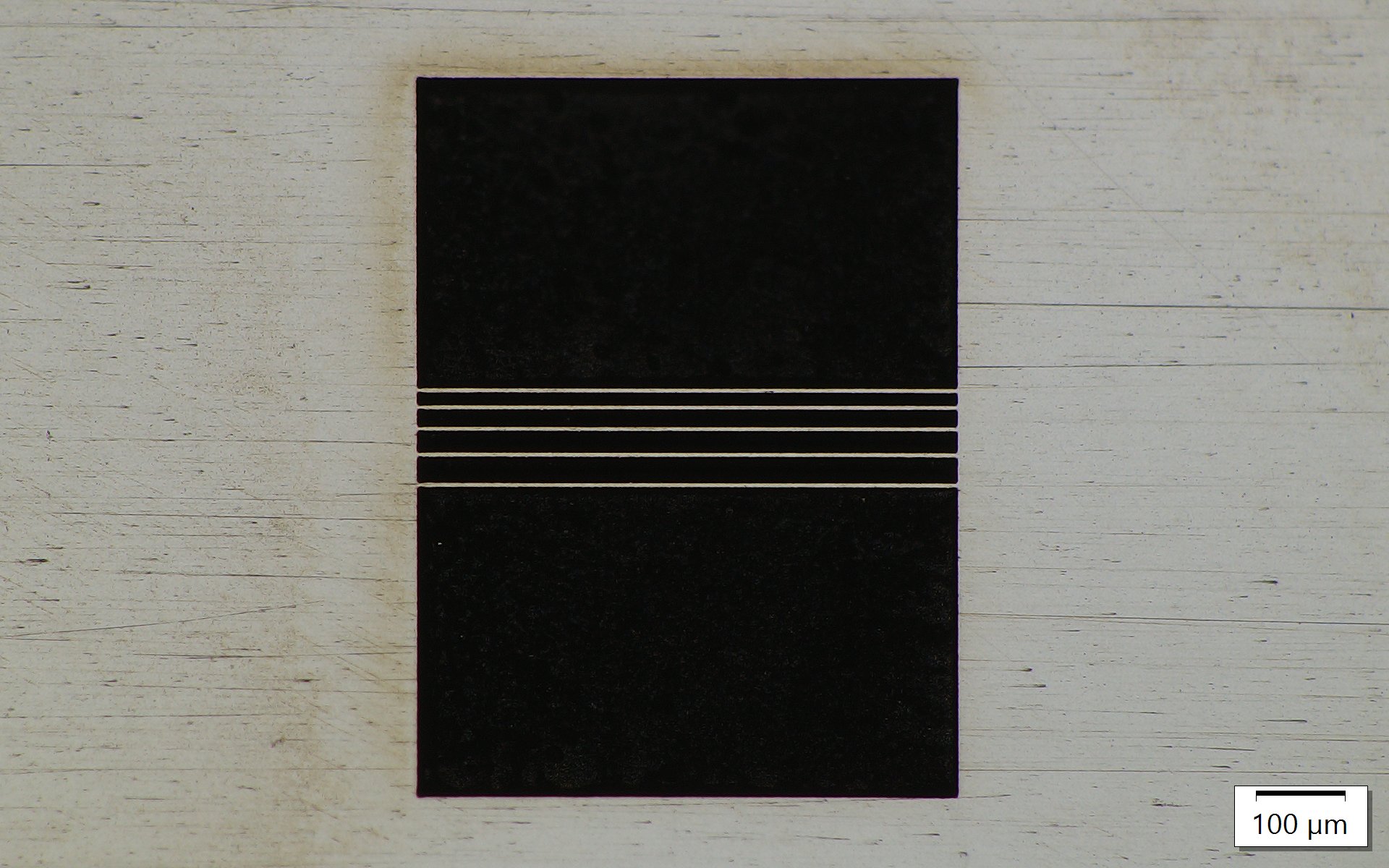
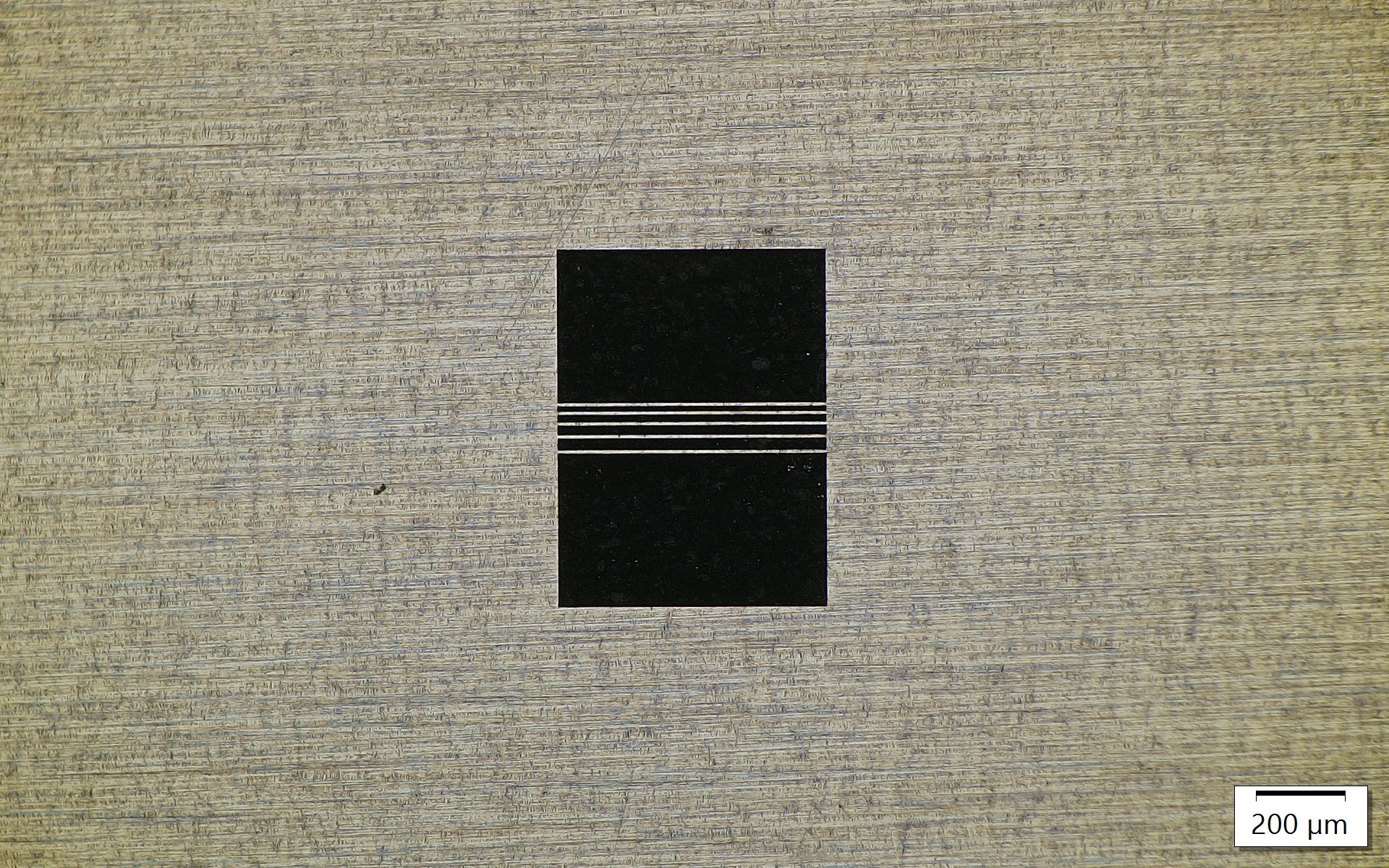
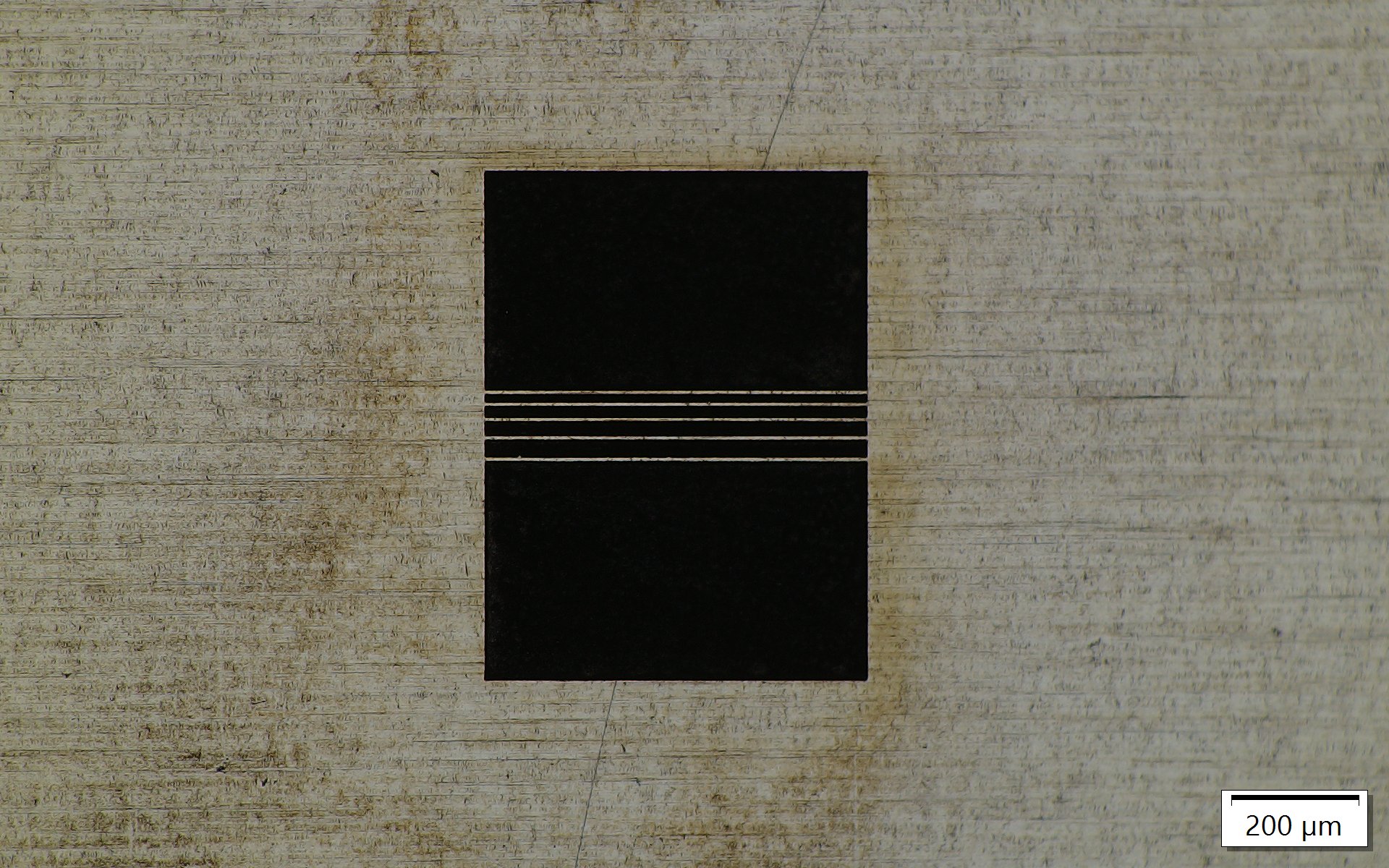
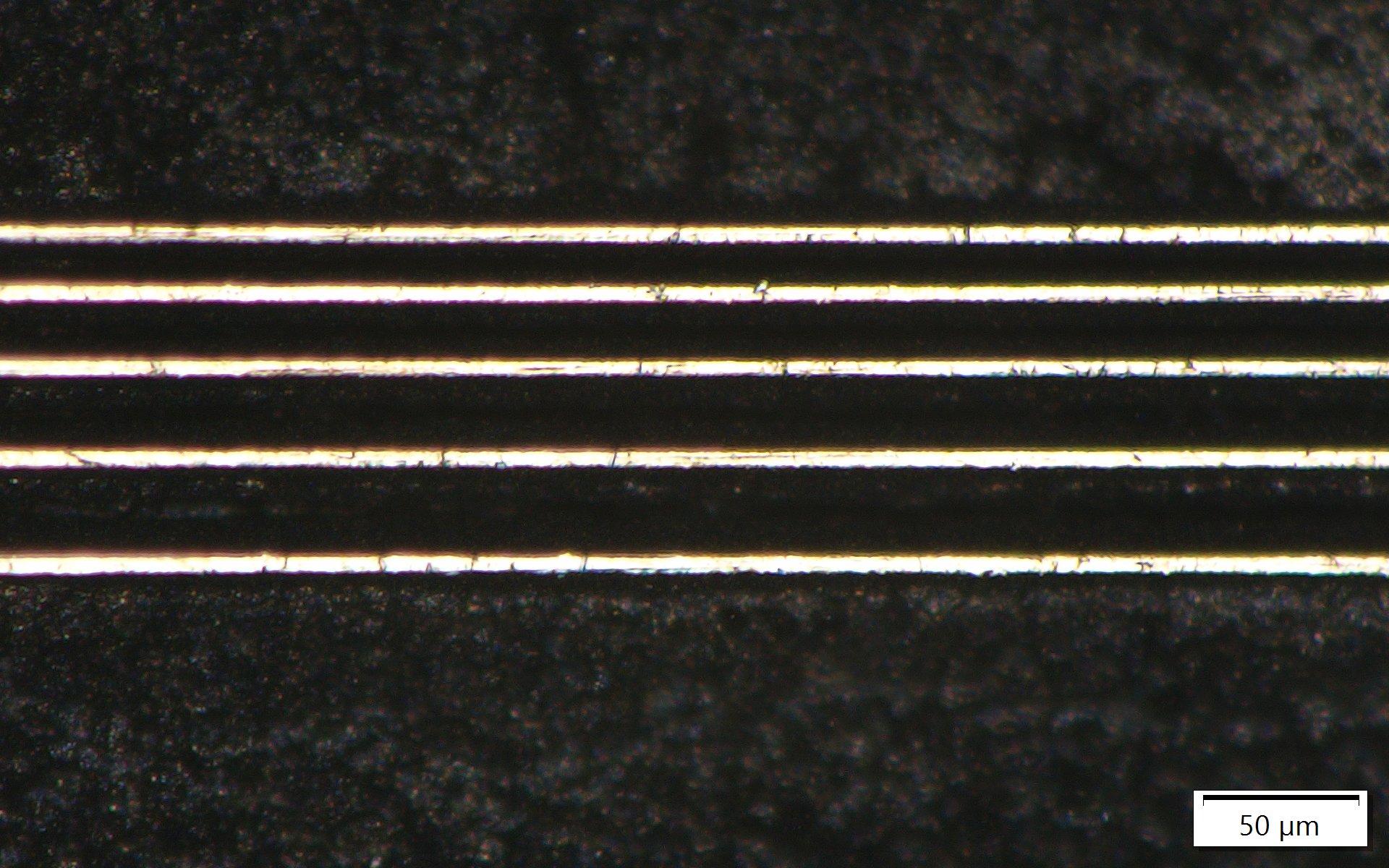
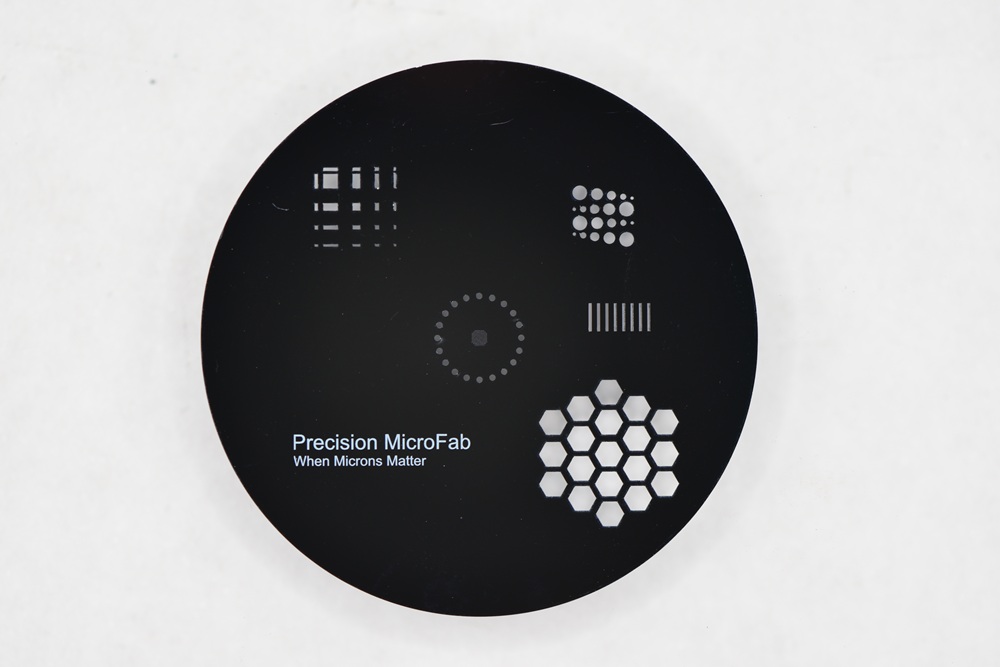
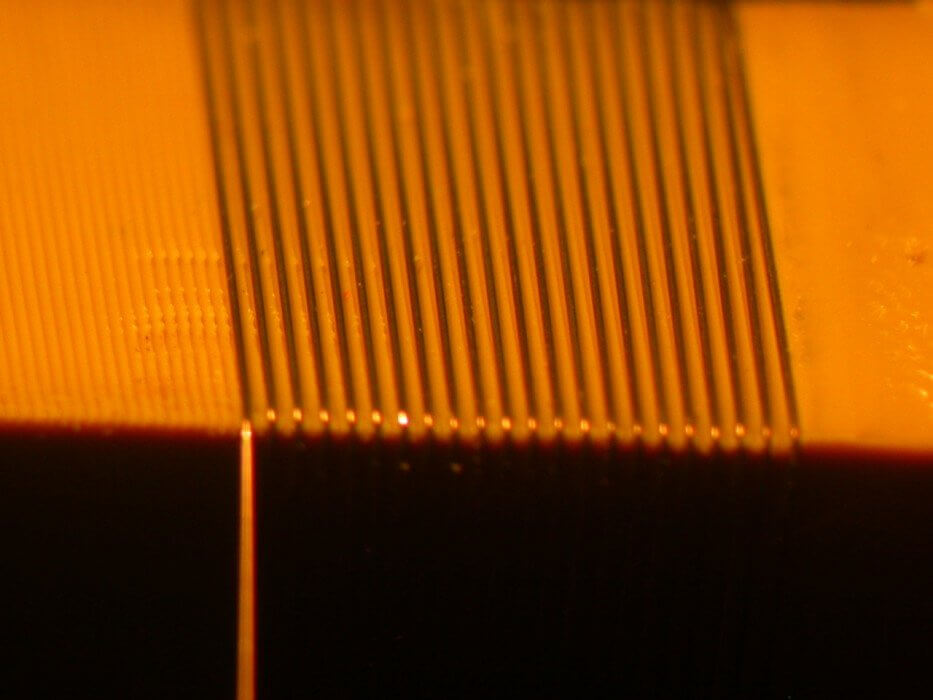
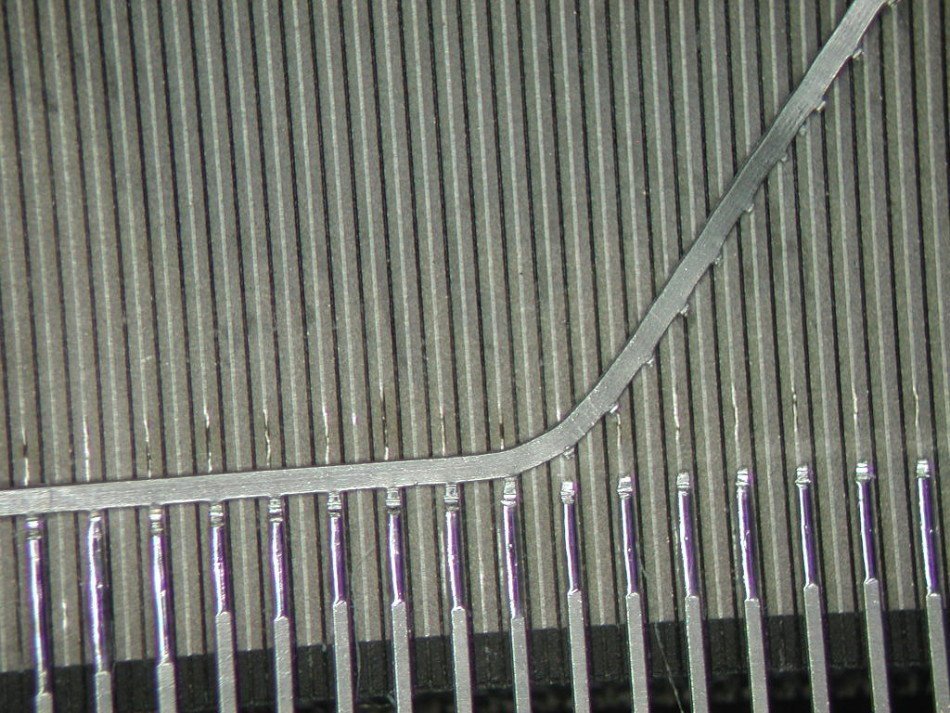
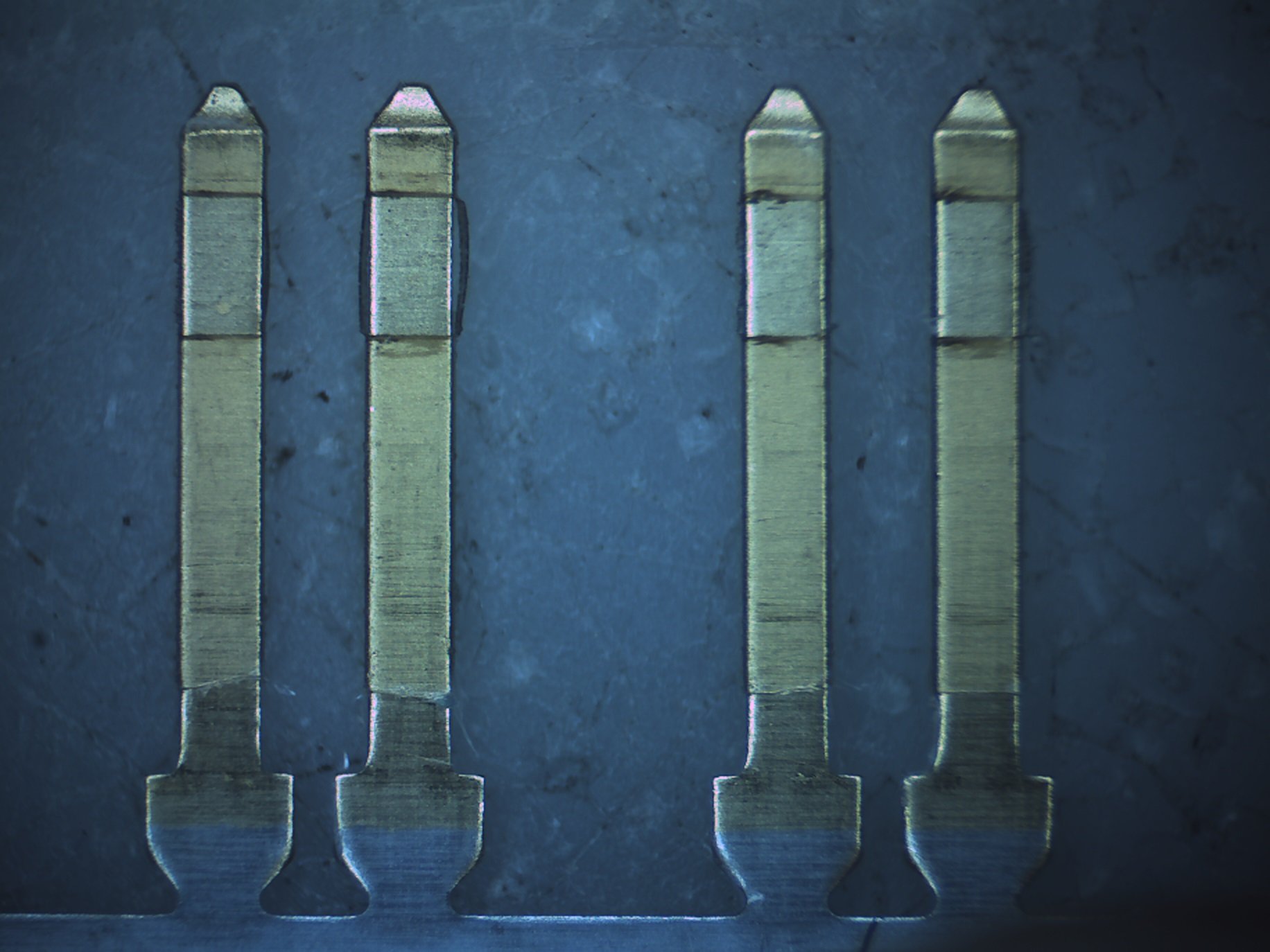
Precision MicroFab used femtosecond laser micromachining to fabricate the tracking targets through precision laser micro-marking. A uniform laser-induced black marking was applied across the stainless-steel surface, with the exception of five fine unmarked lines that formed the optical reference pattern. Stainless steel was selected for its reflectivity and ability to provide the required contrast for optical detection.
Key features included:
Uniform black laser marking across the surface
Five unmarked lines, each 4 µm wide, extending across the full width of the target
High optical contrast optimized for 470 nm illumination
Compliance with customer specified dimensions and tolerances
Results
The femtosecond laser process produced highly precise and repeatable microfeatures with excellent optical contrast and minimal heat-affected zones, preserving feature integrity and dimensional accuracy. The resulting reference pattern enabled reliable line-camera detection for piezo calibration, improving measurement accuracy and calibration performance in high-precision microscopy and motion-control systems.
In addition to meeting all technical requirements, the process provided a repeatable manufacturing solution that reduced the need for secondary operations, minimized scrap, and improved first-pass yield. The finished tracking targets delivered consistent calibration performance, enhanced long-term reliability, and helped reduce overall production and maintenance costs through improved accuracy, durability, and process efficiency.